
Trump has used his first year back in the White House to dismantle large parts of US climate and environmental policy. His administration intends to carry out further destruction in the years ahead.
This was entirely predictable. Trump the politician is primarily interested in advancing the interests of large corporations, particularly big tech and oil. Protecting the profits of big oil also helps keep gas prices low, at minimal direct cost to the federal budget. That, in turn, helps contain inflation — a key Trump priority — at a time when price increases and “affordability” pressures are already beginning to damage his and the Republican Party’s poll ratings.
Climate as a culture-war target
Attacking climate policy is also central to the right’s broader culture war, in which climate change is mocked as a liberal delusion or elite obsession.
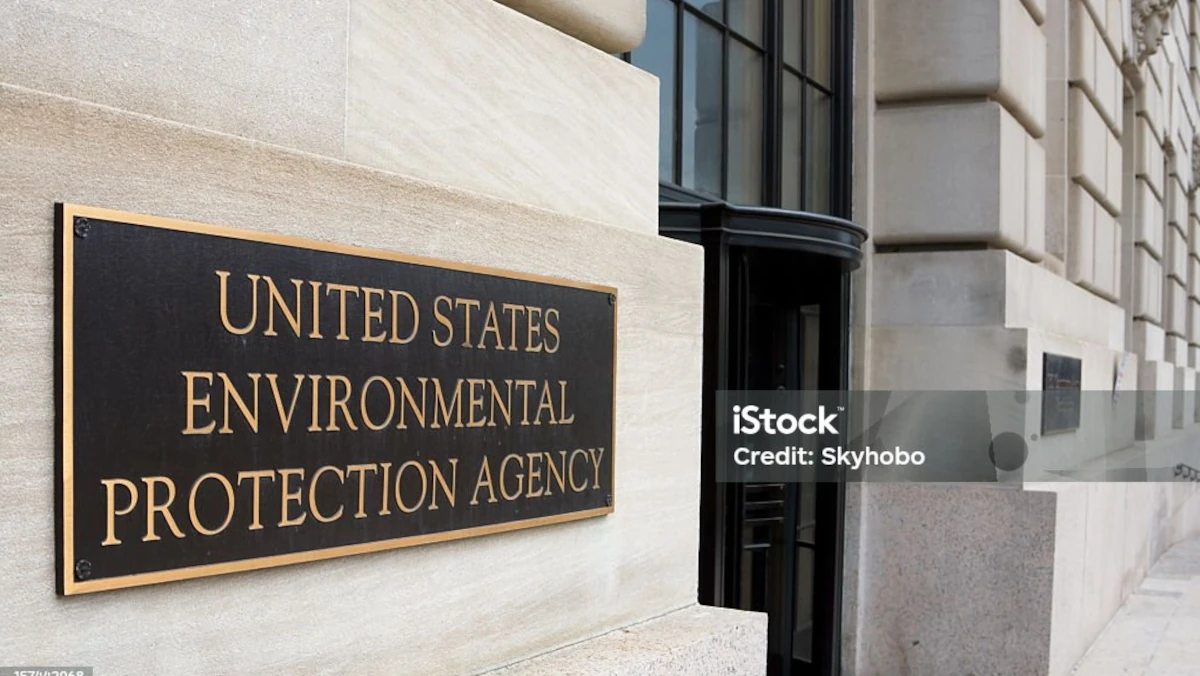
Soon after his inauguration in January 2025, Trump appointed a political ally to run the Environmental Protection Agency (EPA), the body formally tasked with protecting the US environment. Since then, the EPA has delayed methane controls, the clean-up of coal ash, and limits on toxic industrial pollution, while simultaneously relaxing controls on air pollution. These moves form part of a broader pattern of proposed EPA cuts and regulatory rollbacks that further degrade environmental protections across the US.
Government-owned land has been opened up for oil and gas drilling, and heavily polluting coal plants are now being ordered to remain online after previously being scheduled for closure. Despite devastating wildfires and increasingly severe flooding across large parts of the country, the administration is cutting funding for disaster response.
At the same time, the administration has actively slowed the renewable energy sector and climate-related research. It has:
- Removed subsidies for wind, solar, and electric vehicles
- Delayed wind power projects
- Shut down the EPA’s research arm
- Removed climate data from government websites
- Drastically cut funding for the National Climate Assessment
- Announced the dismantling of the National Center for Atmospheric Research
Systematic rollback of environmental protections and disaster response
The administration also intends to repeal the EPA’s 2009 Endangerment Finding, the legal foundation of US climate law. Other plans include:
- Ending requirements to disclose greenhouse gas emissions
- Weakening controls on highly polluting chemicals
- Removing federal protection from millions of acres of wetlands and streams
- Ending funding for the National Oceanic and Atmospheric Administration’s climate science and storm-tracking research
- Reduced funding for disaster response
The return of climate denial
The climate deniers who once formed the core of big oil’s push-back against climate science never disappeared. As evidence mounted and public awareness grew, they were pushed into the background — but they have now returned to the center of power.
Trump has appointed Chris Wright, a fracking executive, as Energy Secretary. Wright has described 2030 net-zero targets as a “sinister goal”, and his appointment reflects how organized climate denial has been rehabilitated and empowered under MAGA politics. The administration is once again providing a platform for some of the most notorious figures in climate denial.
Sabotaging global climate action
The US assault on climate policy, combined with open climate denial from Trump and his allies, has emboldened denialists worldwide. It provides cover for the anti-climate agendas of right-wing and reactionary governments, and reduces pressure on all states to pursue meaningful emissions reductions.
Trump has also been pressuring countries into oil deals. The blockade of Venezuelan oil exports and threats of military intervention are widely understood as an attempt to force access to Venezuela’s oil reserves — a stark example of climate-destructive “resource imperialism”.
The US withdrawal from the Paris Agreement (for a second time), and from the COP process, has further weakened already fragile international climate negotiations. Even discussion of a transition away from fossil fuels has become contentious, and nothing meaningful has been agreed on climate finance for poorer and middle-income countries.
(There may be one unintended benefit: it has become clearer than ever how empty and ineffective the COP process has become.)
The US is central to any serious global climate response. As the world’s second-largest greenhouse gas emitter and its wealthiest country, its role is pivotal. By the end of Trump’s current term, his criminal actions across two presidencies will have caused hundreds of thousands — possibly millions — of unnecessary deaths, while setting the fight against climate catastrophe back by many years.
This is no time for despair
The world is undoubtedly a bleaker place with Trump and his MAGA allies in power, and the climate situation is becoming increasingly critical.
Still, while predictions are always risky, Republicans are already bracing themselves for heavy losses in the 2026 mid-term elections. Economic conditions — which helped propel Trump back to power — are likely to weaken his administration and erode Republican support.
Much can change before 2028, within both the Republican and Democratic parties. If a Democrat wins the next presidential election, a future government will be forced to undo much of this damage simply to restore basic environmental governance. If a Republican wins again, then sustained mobilization for democratic, socialist, and genuinely sane environmental policies will be even more urgent.
Either way, resignation or despair is not an option. Trump’s climate vandalism makes the task ahead clearer and more imperative than ever.
Photo: EPA sign on building – Skyhobo on Istock