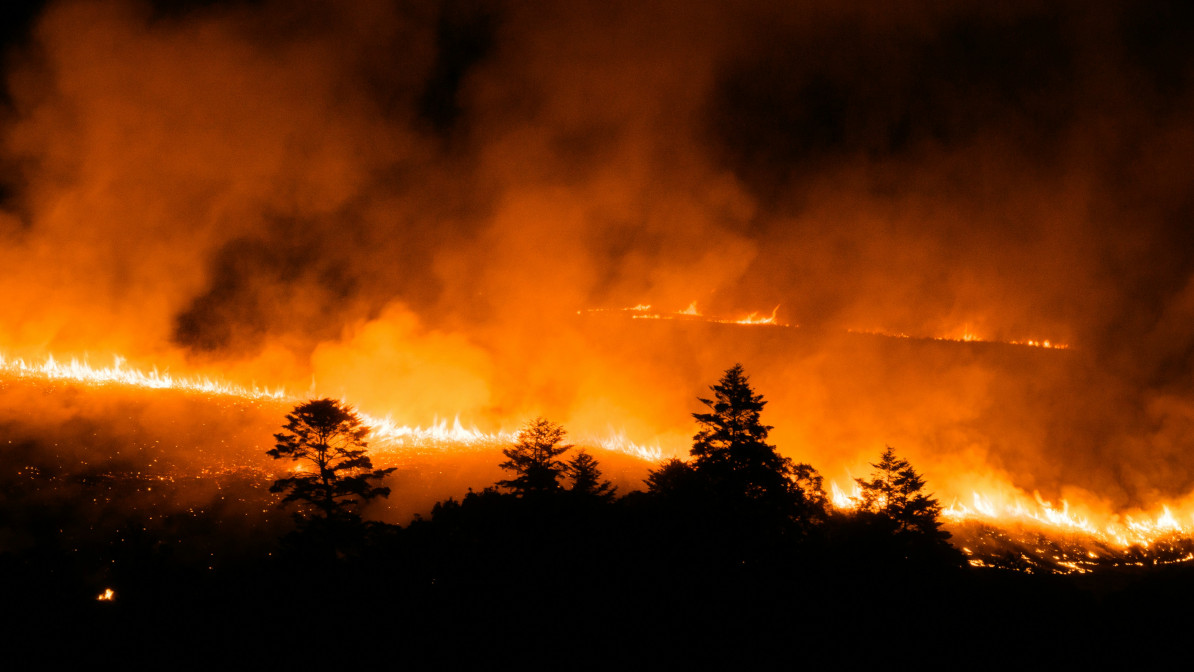
The heatwave that has engulfed most of western Europe has brought home the consequences of the earth’s heating climate. Extreme heat always kills many of the most vulnerable people, while many thousands have had their homes destroyed or have been displaced, and millions of hectares of natural and agricultural land have gone up in smoke.
Politicians have been roused from their inaction and have been talking about making communities more resilient. There is an impressive list of suggestions for new measures and for strengthening existing ones:
- Heat-health action plans and early-warning systems — triggering alerts and coordinating health and emergency services
- Cooler, greener cities — more street trees, parks and vegetation; green roofs and walls; shaded streets and public spaces
- Heat-proof buildings — retrofitting homes, schools, hospitals and care homes with better insulation, external shading, ventilation and passive cooling
- Public cooling centers or “cool spaces” — opening libraries, schools, community buildings and other air-conditioned premises during severe heat
- Protection for workers — maximum-temperature rules or heat thresholds, compulsory breaks, drinking water, altered working hours and suspension of strenuous outdoor work
- Protecting vulnerable people — checking on elderly and isolated residents, homeless people and people with medical vulnerabilities
- Heat-resilient transport and public infrastructure — cooling public transport and stations
- Water security measures — more water storage and supply resilience, reducing leakage, rainwater harvesting, grey-water reuse and drought planning
- Wildfire resilience — more firefighters and equipment, vegetation management, firebreaks, wetland restoration and better early detection and evacuation systems
These are all important initiatives and should become part of a permanent program to adapt to climate change. (How many will be implemented once the heatwave has gone is another question!)
But what has been almost totally missing from official announcements is a commitment to address the frightening pace at which disasters are becoming more frequent and more severe.
Politicians still feel they have to defend plans for carbon neutrality or net zero. In the UK, there is even a debate about new North Sea oil and gas licenses, a measure that Prime Minister Andy Burnham has been too afraid to kill. French Environment Minister Monique Barbut has defended her government’s carbon-neutrality policy, saying that “the main solution to climate change remains reducing emissions.”
Friederike Otto, a professor of climate science at Imperial College London, said: “The heat we have seen this summer is only possible because of the 1.4C of climate change we have to date, due to the burning of fossil fuels.”
Joeri Rogelj, a climate scientist at Imperial College London, made it perfectly clear: “The relationship between heatwaves and global warming is about as straightforward as it gets: on a hotter planet, there will be more heatwaves, and they will become more intense.”
Of course, climate activists have also pointed out the direct connection between the burning of fossil fuels and the heatwaves. Greta Thunberg said: “This is what experts have been warning about for decades… We know that the climate crisis is here and now, and not a faraway threat in the future, and those suffering the most are the ones who have contributed the least to cause it.”
Greta Thunberg Slams UK Government Ahead of 40C Heatwave — Novara Media, 24 June 2026
In the United States, campaigners including Bill McKibben have criticized politicians for failing to connect record heat, wildfires and floods with the need to reverse fossil-fuel expansion.
The cost of the damage caused by the heatwaves is huge. Economists and academics estimate that Europe’s record heat and drought this summer could cost hundreds of billions of euros, as global-warming-driven extremes disrupt power, shipping, public health and agriculture.
In a rational economic system, drastic steps would be taken to slow and then reverse the extremes of heat, drought and flooding. But capitalism is not rational. And the use of carbon credits, tariffs and taxation is little more than tinkering with a disastrous system. Governments will have to confront fossil-fuel interests head-on if carbon emissions are to be brought down quickly.
Photo by RO Kazui on Unsplash