
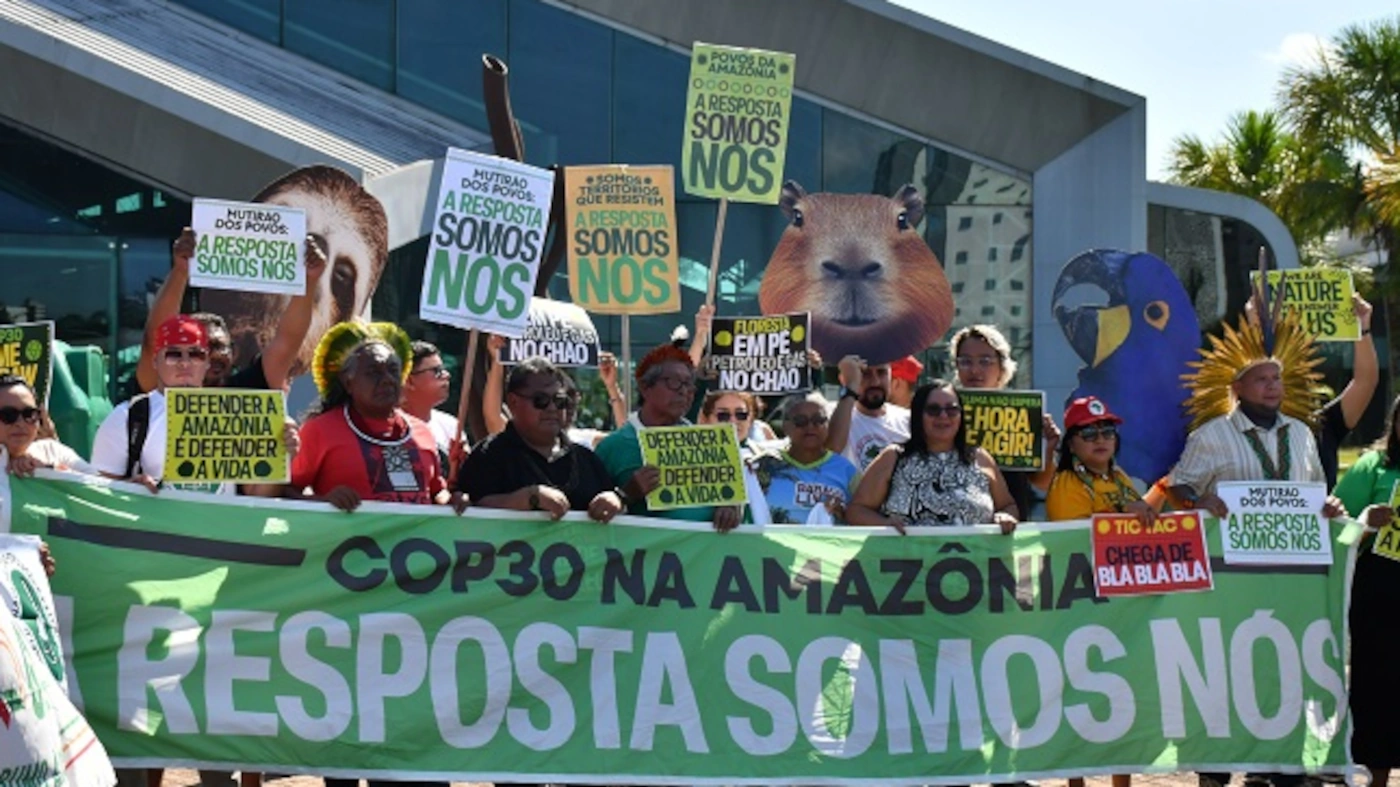
Mass protests inside and outside the COP30 venue
Protesters from civil society made their voices heard during the first week of COP30.
Thousands of youth, Indigenous groups and social movements marched outside the UN venue in Belém.
There were also protests inside the venue. Their messages included demands for climate justice, an end to fossil-fuel expansion, and recognition of Indigenous leadership in the climate negotiations.
The themes of the protests reflected the main obstacles to global progress on climate.
Fossil fuels again at the center of conflict
Inside the talks, fossil fuels again became a major area of conflict. More than 60 countries, notably including the extremely vulnerable small island states, pushed for a roadmap to phase out oil, gas and coal. As with previous COP summits, major fossil-fuel producers opposed any concrete plan to end fossil fuels. They continued to promote carbon-capture technologies as an alternative to reducing emissions.
A record number of industry lobbyists were present to add their voices to the promotion of fossil fuels.
Hosts Brazil, despite presenting themselves as climate champions, were criticized for continued offshore oil exploration.
Climate finance: no progress on the Baku-to-Belém Roadmap
Climate-finance negotiations stalled almost immediately. Prior to the conference, the Azerbaijani and Brazilian governments produced the “Baku-to-Belém Roadmap”, a plan to mobilize around USD 1.3 trillion annually by 2035. Most of this plan centers on private finance, essentially meaning loans.
But private investors have no interest in funding adaptation or loss-and-damage measures — there are no profits to be made. Large amounts of grant finance will be essential.
The question of which countries should contribute led to complete deadlock. Developed countries argued that contributions should reflect capacity to pay, pointing out that middle-income countries are now major emitters.
Developing countries, in turn, argued that contributions must be based on historic responsibility for climate change. No progress was made.
Accountability and transparency disputes intensify
Transparency and accounting also became flashpoints. Wealthy nations want tougher verification rules, while developing countries argue they are already overloaded with reporting requirements they lack the capacity to fulfill. Several agenda items linked to reporting and transparency were pushed into difficult consultations,
with little sign of agreement.
New tensions over NDCs, just transition and carbon-border tariffs
Other COP30 themes included calls for stronger Nationally Determined Contributions (NDC 3.0 – national plans for emission reductions), debates over just-transition mechanisms, and renewed focus on critical minerals and supply chains as the world races toward electrification.
Tariffs on imports based on their carbon footprints emerged as a new point of conflict, with developing countries describing these measures as new forms of trade barriers.
Growing criticism of the COP system itself
Finally, more questions are now being asked about the entire COP model. For many years that the consensus-based system has allowed a handful of obstructionist states to block meaningful progress, turning COPs into bloated trade shows dominated by powerful corporate interests. Reuters reported on a leaked UN document questioning whether the COP format should continue in its current form.
This reappraisal of the COP process is long overdue. It is increasingly clear that COP meetings are far from producing any sensible plans to address the global crisis.