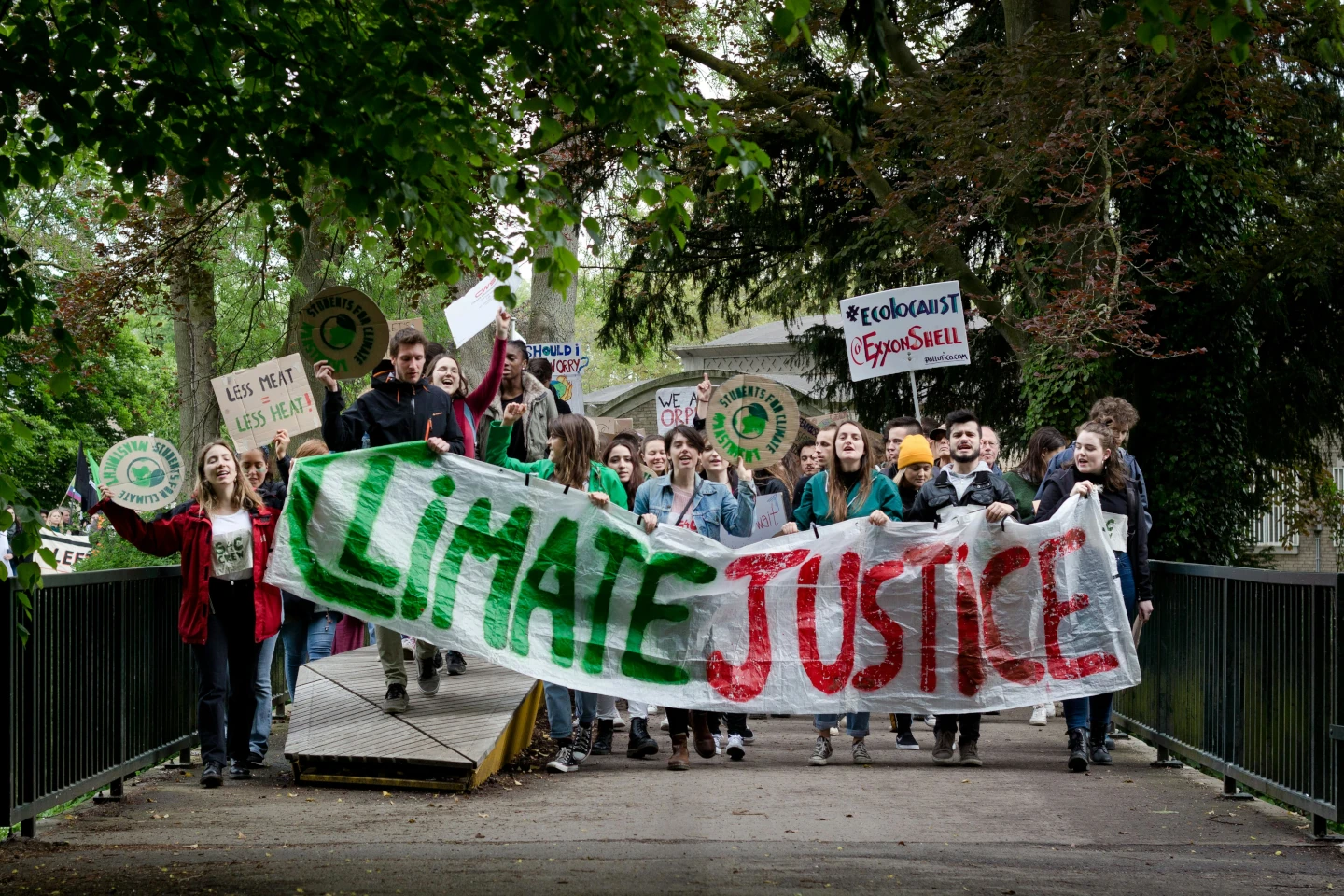
The COP30 summit in Belém last year was a big disappointment for climate campaigners. This was supposed to be the “peoples’ summit”, responding to the needs of millions across the world demanding action on the climate crisis.
Instead, it delivered the same half-hearted commitments that have characterized the COP meetings for many years.
The annual United Nations COP summits began in 1995 (COP1 in Berlin). They were intended to provide a global forum where governments could negotiate collective action on climate change.
Since then, COP summits have been held almost every year, hosted by different cities around the world. Each meeting ends with some sort of statement or agreement on actions to be taken by member governments.
Paris agreement
There have been some significant achievements. The most important of these was the Paris Agreement of 2015.
The agreement has a long-term goal for restricting global temperature rise to 2 °C, preferably 1.5 °C. Each country agreed to progressively reduce emissions to specific targets.
But it was partly the very “success” of the Paris Agreement that led to growing disillusionment among climate activists, as countries failed to meet their targets, and successive COP meetings ended without agreement on crucial issues.
In 2021, just before the COP summit in Glasgow, Greta Thunberg famously derided politicians’ empty statements as “blah blah blah”.
The criticisms of the summits included:
- Agreements reached at COP meetings are routinely ignored or watered down
- Finance promises are falling way short of what is needed
- Fossil fuel producing countries are blocking of stronger fossil fuel phaseout language
- Fossil-friendly governments (for example United Arab Emirates and Azerbaijan) are hosting summits, and negatively influence the outcomes
- The number of fossil fuel lobbyists at COP meetings has has steadily increased
- Demands of indigenous and civil society organizations are ignored
Another failure at Belém
Activists and campaigners had high hopes for COP30 in Belém. But their optimism was misplaced. What was meant to be a “people’s COP” was a repetition of previous failures. As usual, the summit failed to agree on an end fossil fuels, and wealthy countries failed to commit to any significant funding for mitigation, adaptation or loss and damage.
The failure of COP30 to live up to expectations has emphasized the degree of dysfunction in these annual summits.
The rotation of host cities according to geographic blocs, which has given a platform for fossil friendly countries such as Egypt and Azerbaijan, is a big problem. The increasing number of fossil fuel lobbyists, sometimes as members of country delegation, is another. But the greatest obstacle to progress is the United Nations format requiring complete consensus. It takes only a few relatively influential countries to block any meaningful agreements.
There is a growing realization that COP stalemates are more than just diplomatic failures. At the very least, significant reform to the negotiating structures and processes will have to happen if progress is to be made.
Colombia conference
In response to the frustration around the summits, Colombia and the Netherlands convened a conference to set out an alternative approach to international climate politics. Calling the conference a “Coalition of the Willing”, they invited over 50 countries and many scientists, NGOs and indigenous groups to a meeting on 28 and 29 April 2026 in Santa Marta.
High on the agenda of the conference was a discussion on a transition away from fossil fuels. Colombia, which has a large fossil fuel sector and is a significant exporter of oil, has itself decided to stop licensing of new oil, gas and coal exploration.
An important result of the conference was a report from the scientists on a transition away from fossil fuels. Free from the shackles of the IPCC rules prohibiting scientists from prescribing policies, the Santa Marta report presents a methodology for a transition “roadmap” for countries to adopt. Scientists presented a model roadmap for Colombia.
In line with many other reports, the Colombia roadmap predicts huge net savings for the county over the next 25 years if is successfully achieves the roadmap’s objectives. But an examination of its recommendations reveal a familiar mix of frameworks, policies and incentives that have little likelihood of delivering the required results. Most notably is the expectation that most of the upfront investment will be from the private sector. The roadmap is not so much a map as an old fashioned compass showing the general direction of the destination.
Global transition from fossil fuels
A global transition away from fossil fuels and a reduction in all greenhouse gas emissions will take much more than the implementation of green friendly policies and an enabling environment for industrial transformation. It will require far reaching measures such as international action to enforce the phasing out of all production of fossil fuels, and huge government investments into renewables and decarbonization of economies.
The willingness of 50 and more countries to agree on the need to phase out fossil fuels is an advance on COP agreements. It puts pressure on governments, and gives a lever for activists to campaign on. But the science behind the roadmap approach is totally inadequate.
Many climate scientists are pointing out the catastrophic consequences of global warming and the need for immediate and progressive cuts to carbon emissions.
The “pathways” and “roadmaps” to reaching net zero emissions, should be able to point to a concrete way for doing this. But detailed calculations for what emissions need to be cut and when are essentially more progressive variations of the IPCC pathways.
There is a glaring gap between the fully justified dire warnings from scientists about the future, and the roadmaps being offered to change direction. Any realistic roadmap has to acknowledge the political forces supporting fossil fuels and propelling global warming. As long as climate science fails to recognize the inability of capitalist markets to support a radical transformation, it is failing to grasp the magnitude of the crisis.
Photo: Marching climate protesters – Vincent M.A. Janssen on Pexels